CS2 Rarity Tiers Explained
The Rarity Ladder
Every weapon finish carries a rarity grade shown as a color. From most common to rarest, the weapon grades are Consumer (white), Industrial (light blue), Mil-Spec (blue), Restricted (purple), Classified (pink) and Covert (red). Above all weapon grades sit knives and gloves, labeled Extraordinary and marked with a gold star.
These grades describe scarcity within a collection or case, not quality or appearance. A finish's grade is fixed by its creators and is the same for every copy, regardless of wear or pattern. The color you see on an item card tells you instantly where it falls on the ladder. Understanding the order is the foundation for everything else, from reading case contents to planning trade-ups, which move items up exactly one grade at a time.
The Weapon Grades in Detail
The six weapon grades each describe a rung of scarcity. Consumer and Industrial finishes are the most plentiful and typically the cheapest, often appearing as inexpensive drops. Mil-Spec blue skins are the common tier in most cases. Restricted purples are less common, Classified pinks rarer still, and Covert reds are the scarcest weapon finishes in a given case or collection.
Within a case, the higher the grade, the lower the chance of unboxing it, which is part of why Covert skins draw so much attention. Collections that drop in-game follow the same color hierarchy. Keep in mind that grade is relative to the source: a Mil-Spec from one collection and a Mil-Spec from another share a tier but can differ wildly in price and popularity. The color sets expectations for scarcity, not for the specific value of any one finish.
Knives, Gloves and Contraband
Knives and gloves occupy the top of the ladder as ★ Extraordinary items, shown with a gold star. In cases, they are the rarest possible outcome, far less likely than even a Covert, which is why they command the highest prices. They cannot be produced through trade-up contracts; the only in-game source is unboxing, with the rest of supply coming from the market.
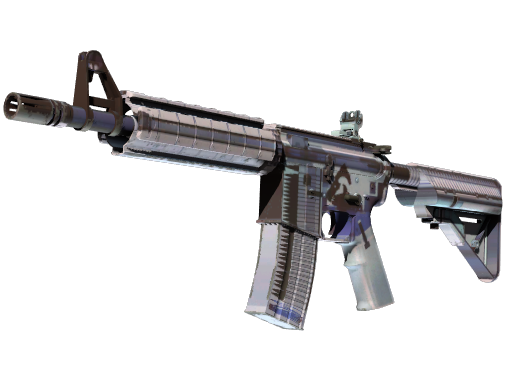
There is also a special historical label, Contraband, applied to a finish that was discontinued, most famously the M4A4 Howl after its artwork was removed. No new Contraband items enter circulation, so their supply is fixed. Contraband is not a tier you can aim for; it simply marks items that were pulled from production. For practical purposes, think of the ladder as the six weapon grades, then the Extraordinary star for knives and gloves on top.
Rarity, Drop Odds and Supply
Rarity grade directly shapes unboxing odds. In a weapon case the common Mil-Spec tier makes up the bulk of outcomes, with each step up, through Restricted, Classified and Covert, carrying a progressively smaller chance, and the knife or glove slot rarest of all. The published odds are weighted so that rarer grades appear far less often.
Opening cases to chase high grades is a form of gambling with a built-in house edge and negative expected value on average, meaning most openings return less than they cost. It is intended as entertainment, is restricted to players 18 and over, and you should only ever spend what you can afford to lose. Supply also matters: a grade can be rare to unbox yet still plentiful on the market if the case has been opened millions of times. Our case opening guide covers the odds and risks in detail.
Rarity Versus Price
It is tempting to assume a higher tier always means a higher price, but rarity and value are not the same thing. Price is set by demand and supply, not color alone. A visually striking Restricted skin from a sought-after collection can easily cost more than a dull Covert from an unloved one, and a heavily opened case floods the market with its Coverts, holding prices down.
Demand factors, such as how good a finish looks, how well known it is, and whether it suits a popular weapon, often outweigh the raw tier. Use rarity as one input among several, not as a price tag. When valuing a skin, look at actual sales for that specific finish rather than inferring worth from its color. Our guide on price-checking explains how to find what a skin is really worth.
Questions & answers
What are the CS2 rarity tiers in order?
For weapons, from most common to rarest: Consumer, Industrial, Mil-Spec, Restricted, Classified and Covert. Knives and gloves sit above these as Extraordinary, marked with a gold star.
What does Contraband mean?
Contraband marks a finish that was discontinued and removed from production, such as the M4A4 Howl. No new copies enter circulation, so supply is fixed. It is not a tier you can obtain through normal drops or trade-ups.
Does a higher rarity always cost more?
No. Price depends on demand and supply, not color. A popular Restricted skin can outprice an unpopular Covert. Use rarity as a guide to scarcity, then check actual sales for real value.
Can I get a knife from a trade-up contract?
No. Trade-ups move one weapon grade at a time and stop at Covert. Knives and gloves are a separate Extraordinary category obtainable only through unboxing or buying on the market.